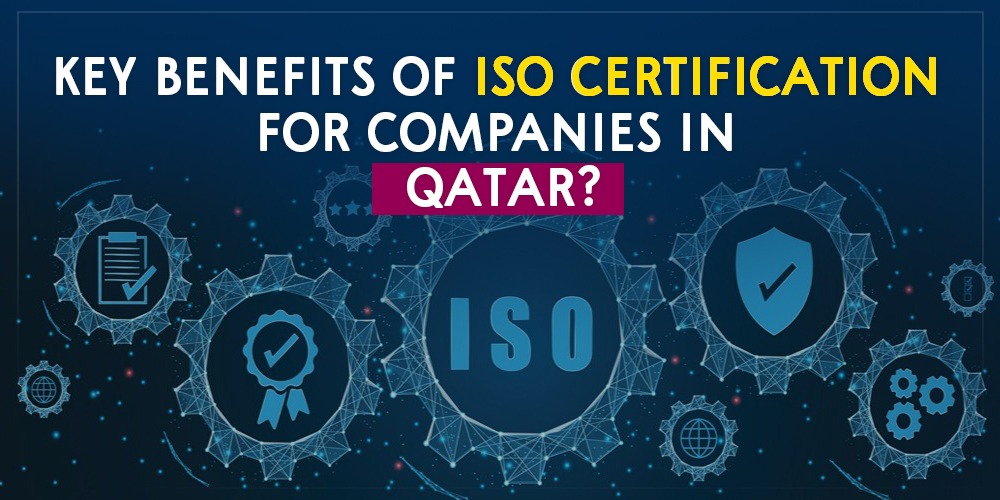
In Qatar’s fast-evolving market driven by national development targets, infrastructure expansion, energy diversification, and growing ESG expectations ISO certification is more than a badge. It’s a practical framework for winning tenders, reducing risk, elevating quality, and scaling with confidence. Here’s what you gain and how to get started.
1. Win more tenders and contracts
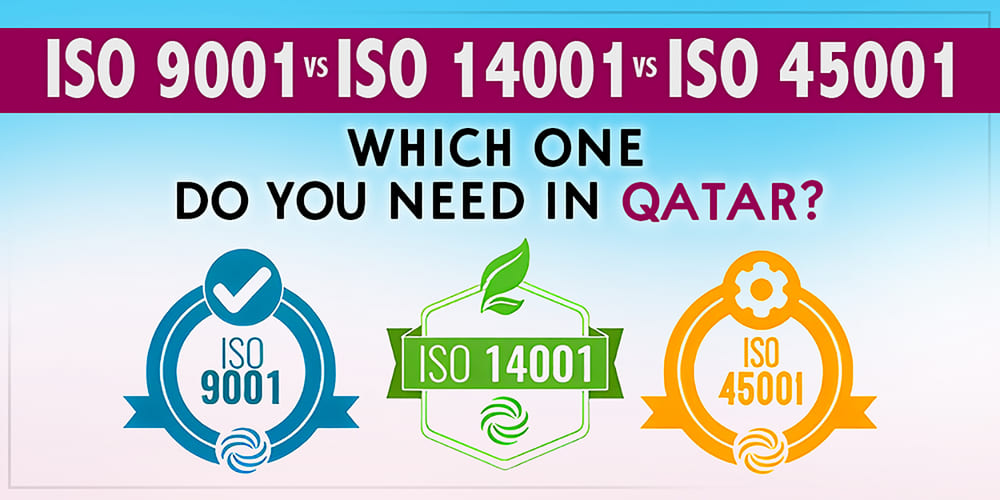
Many public and private tenders in Qatar (construction, oil and gas, facilities management, logistics, healthcare) explicitly require or strongly prefer ISO certifications such as ISO 9001, ISO 14001, and ISO 45001.
2. Build trust and brand reputation
Independent certification signals consistent quality, safety, and compliance—reducing buyer concerns and strengthening your market positioning
3. Operational efficiency and cost savings
Standardized processes mean fewer reworks, better throughput, and less waste. ISO helps you institutionalize continual improvement (PDCA) that compounds over time.
4. Risk management and compliance
HSE, environmental, data security, and business continuity risks are better identified, mitigated, and monitored—crucial for regulated sectors in Qatar.
5. Stronger customer satisfaction and retention
Process discipline translates into reliable delivery, clearer communication, and measurable service performance.
6. Safer workplaces and higher engagement
ISO 45001 fosters a proactive safety culture that reduces incidents, downtime, and associated costs while improving morale and retention.
7. Environmental performance and ESG alignment
ISO 14001 helps you manage aspects/impacts, cut resource consumption, and meet stakeholder sustainability expectations.
8. Data security and continuity assurance
Standards like ISO/IEC 27001 and ISO 22301 strengthen resilience against breaches and disruptions key for finance, government suppliers, and critical services.
9. Better supplier and stakeholder confidence
Clear criteria for supplier evaluation and performance monitoring lead to stronger, more predictable supply chains.
10. Culture of continuous improvement
ISO embeds measurement, internal audits, corrective actions, and management reviews ensuring improvements are systematic, not ad hoc.
QAC is the best choice for ISO certification in Qatar. Contact us now.
For companies in Qatar looking to thrive in an increasingly competitive landscape, ISO certification is more than just a badge; it's a strategic investment. It offers a robust framework to enhance credibility, boost efficiency, satisfy customers, manage risks, and ultimately, drive sustainable growth. By aligning with international best practices, Qatari businesses can solidify their position in the local market and make a significant impact on the global stage.